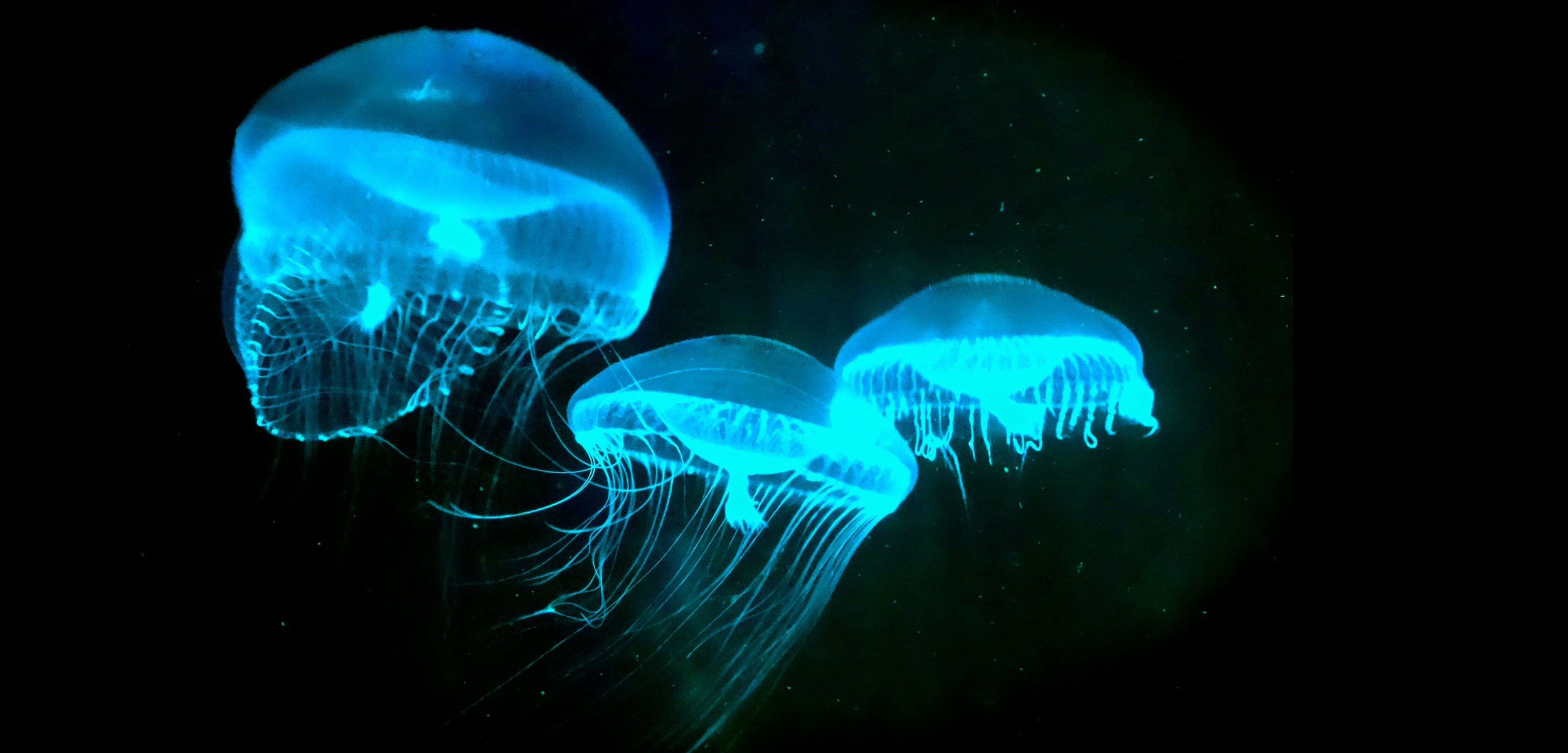
Bioluminescence is the ability of living organisms to produce light. It is a fascinating phenomenon that is found in a variety of species, from bacteria and fungi to fish and insects. Bioluminescence is used by these organisms for a variety of purposes, including communication, camouflage, and attracting prey.
The process of bioluminescence is a chemical reaction that involves the interaction of two molecules: luciferin and luciferase. Luciferin is a molecule that produces light when it is oxidized by the enzyme luciferase. This reaction occurs within specialized cells or organs called photophores, which are found in various parts of the body depending on the species.
One of the most well-known examples of bioluminescence is the firefly. The flashing lights of fireflies are a result of a chemical reaction between luciferin and luciferase within their specialized light-producing cells. The pattern and frequency of the flashes are used by fireflies to attract mates.
Another example of bioluminescence can be found in deep-sea creatures such as the anglerfish. The anglerfish has a long, thin appendage on its head that contains bioluminescent bacteria. The light produced by these bacteria is used to attract prey towards the fish’s mouth.
Bioluminescence can also be found in some species of mushrooms and jellyfish. In mushrooms, the bioluminescent reaction occurs in the cap and stem, and is thought to play a role in attracting insects for spore dispersal. In jellyfish, the bioluminescent reaction occurs in specialized cells called photocytes, and is used for both defense and attracting prey.
Researchers are continuing to study bioluminescence to learn more about its chemical and biological properties. This research has led to the development of new technologies, such as bioluminescent imaging, which is used to study cellular and molecular processes in living organisms.
Overall, bioluminescence is a fascinating phenomenon that has captured the attention of scientists and the public alike. Its wide variety of uses and applications make it an important area of research that will continue to yield new discoveries in the years to come.